
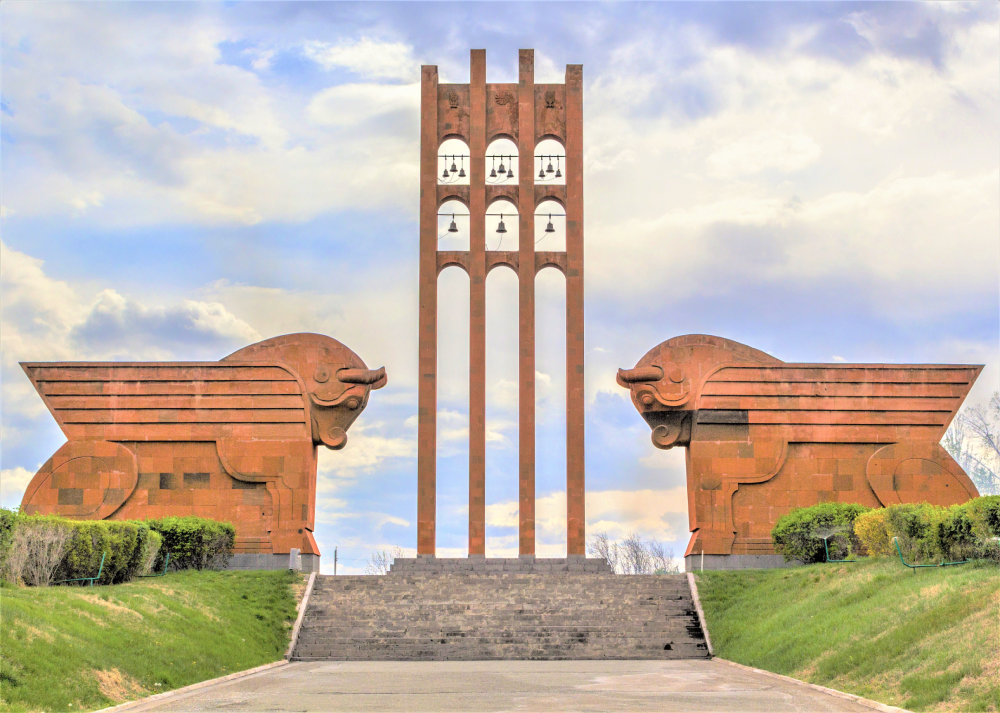
Sardarapat Memorial Complex is dedicated to the Battle of Sardarapat, located in the Armavir Province near the Armenian-Turkish border, about a 1-hour drive from Yerevan.
The memorial stands as a symbol of pride, survival, and victory in the battle against the Turks, which took place between May 21 and 29, 1918. The Ottoman army, having invaded Eastern Armenia, was attempting to reach the religious center of Etchmiadzin, then the capital Yerevan, and ultimately unite with its ally Azerbaijan by wiping Armenia off the map.
Thanks to the bravery of the Armenian military units and commanders Tovmas Nazarbekian, Movses Silikyan, Daniel and Poghos Pirumyan, and others, the 9,000-strong Armenian army managed to defeat the 33,000-strong Ottoman force.
The victory at Sardarapat was a turning point in Armenian history — it was a matter of life or death for the Armenian nation. Without this victory, the formation of the First Republic of Armenia just days later on May 28 might not have been possible.
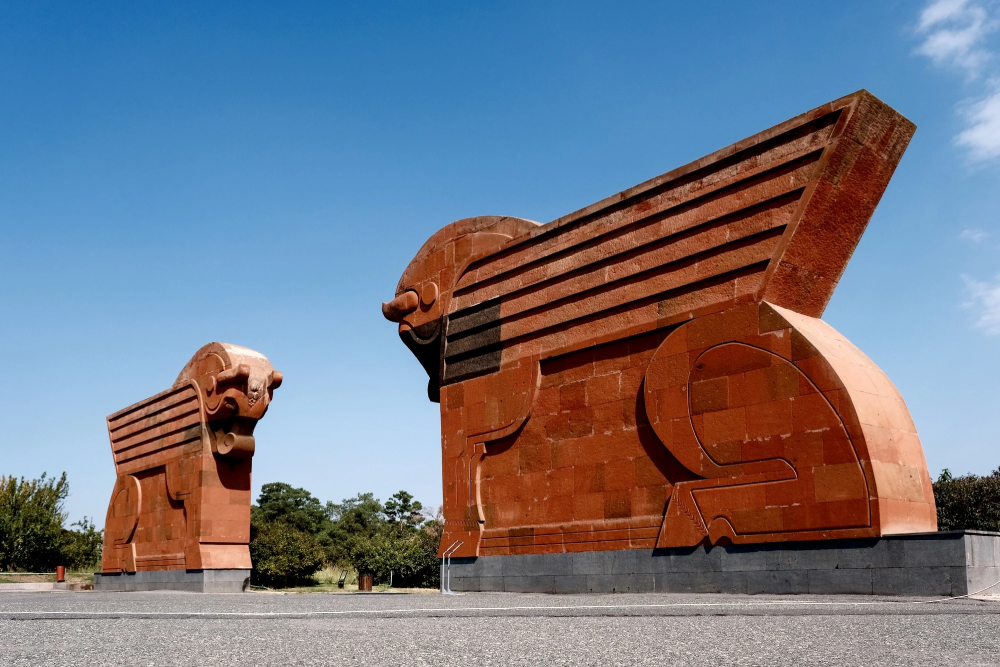
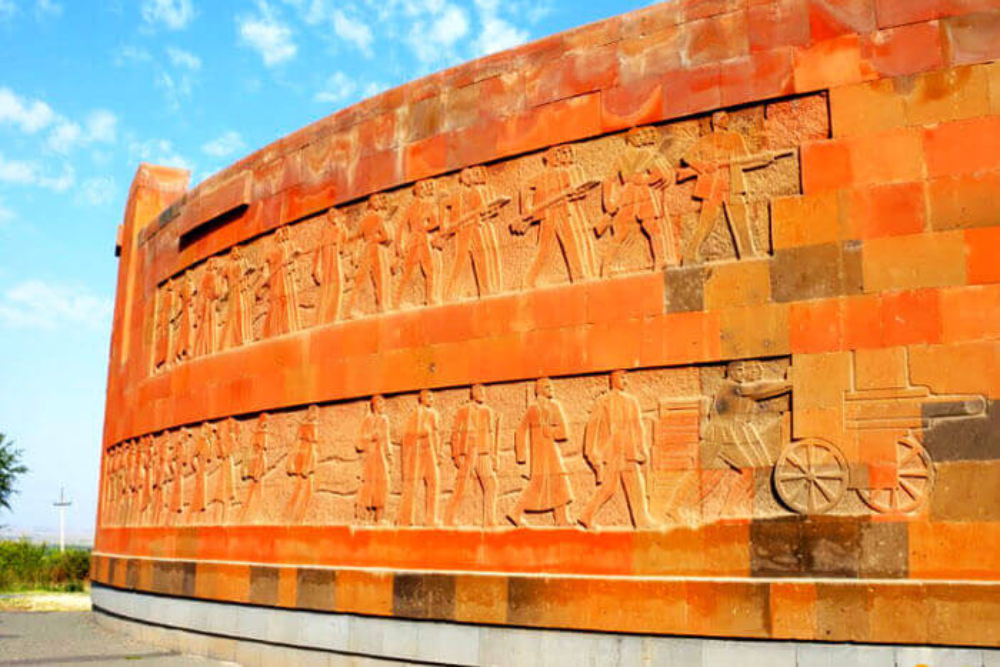
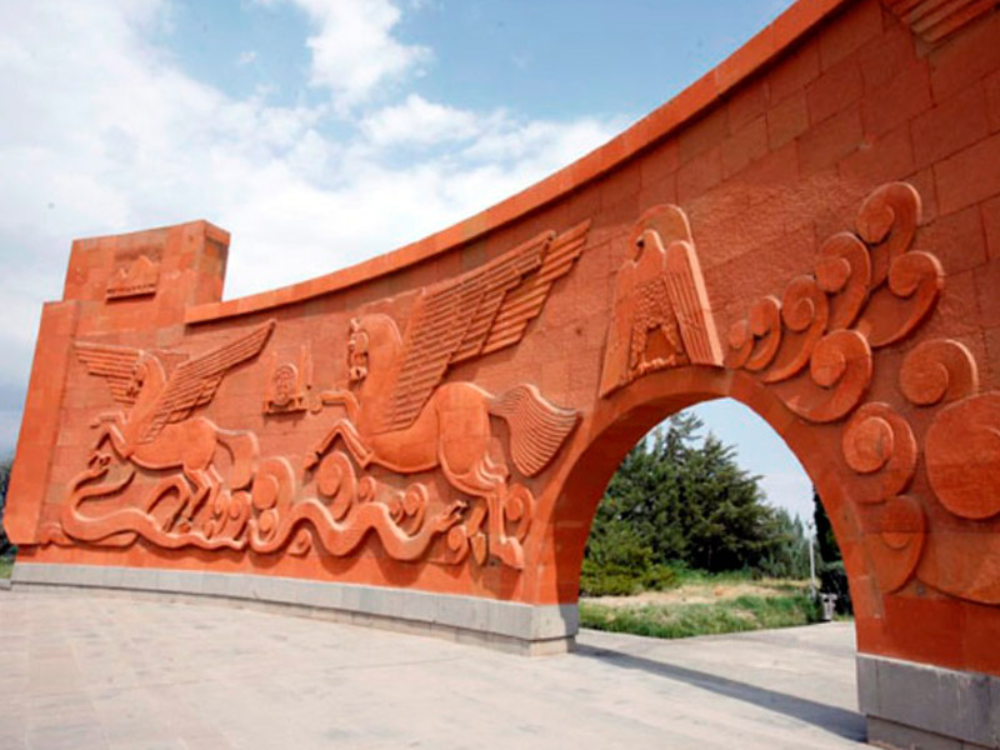
Sardarapat Memorial Complex was designed by architect Rafayel Israyelyan in the 1960s. The entrance is flanked by two massive winged oxen sculpted from red tufa stone, symbolizing power and vigilance. A long path made of dark basalt stone, lined with red tufa walls, leads to a tall bell tower. Its twelve bells ring in memory of the heroes who gave their lives for the right of existence of the Armenian Republic.
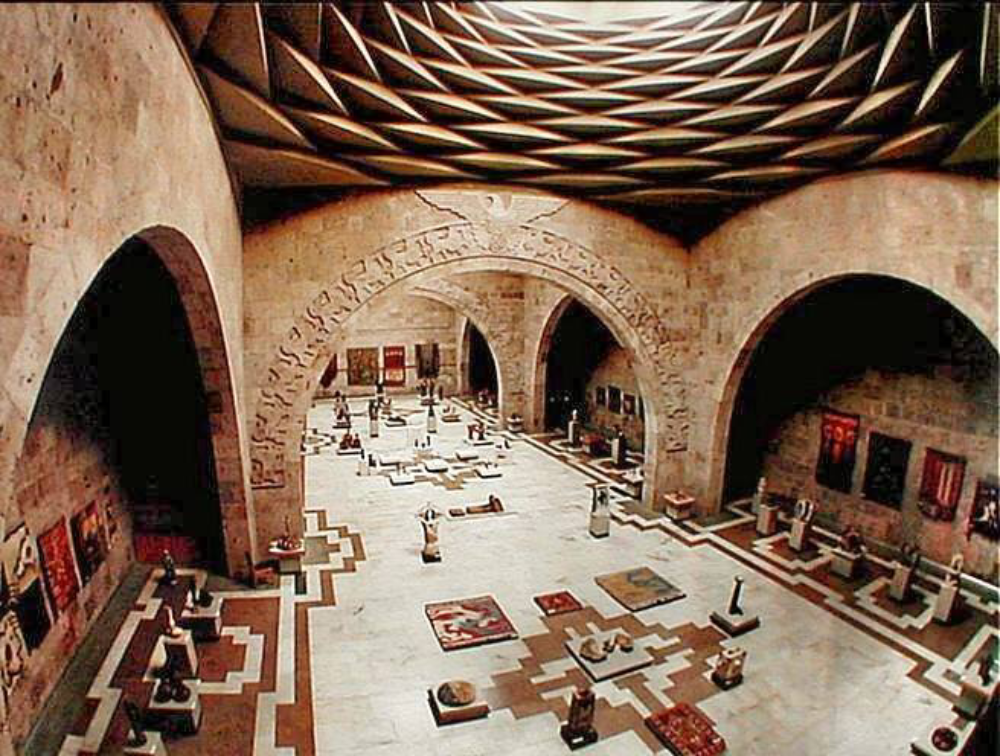
The Ethnographic Museum of Armenia was established in 1968 as part of the Sardarapat Memorial Complex. Its official name is the National Museum of Armenian Ethnography and the History of the Liberation Struggle. The museum showcases the material and spiritual culture of the Armenian people across different historical periods and regions.
The collection includes traditional costumes from various Armenian regions, handcrafted tools, carpets and rugs, musical instruments, wedding and religious artifacts, including dowries and ritual objects. The museum also holds photographs and documents that illustrate the cultural, social, and economic life of Armenians throughout the centuries.


Comment (0)