
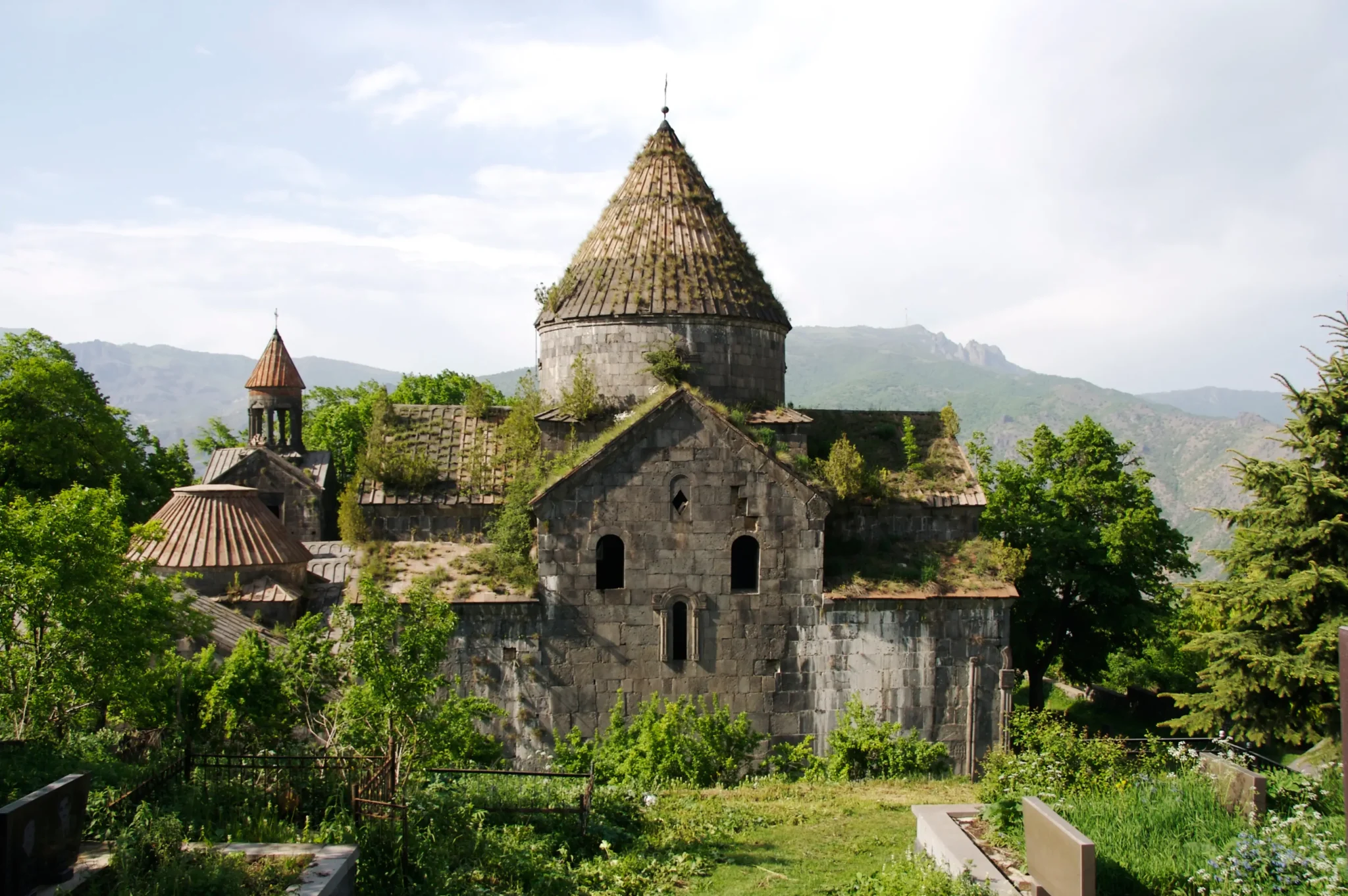
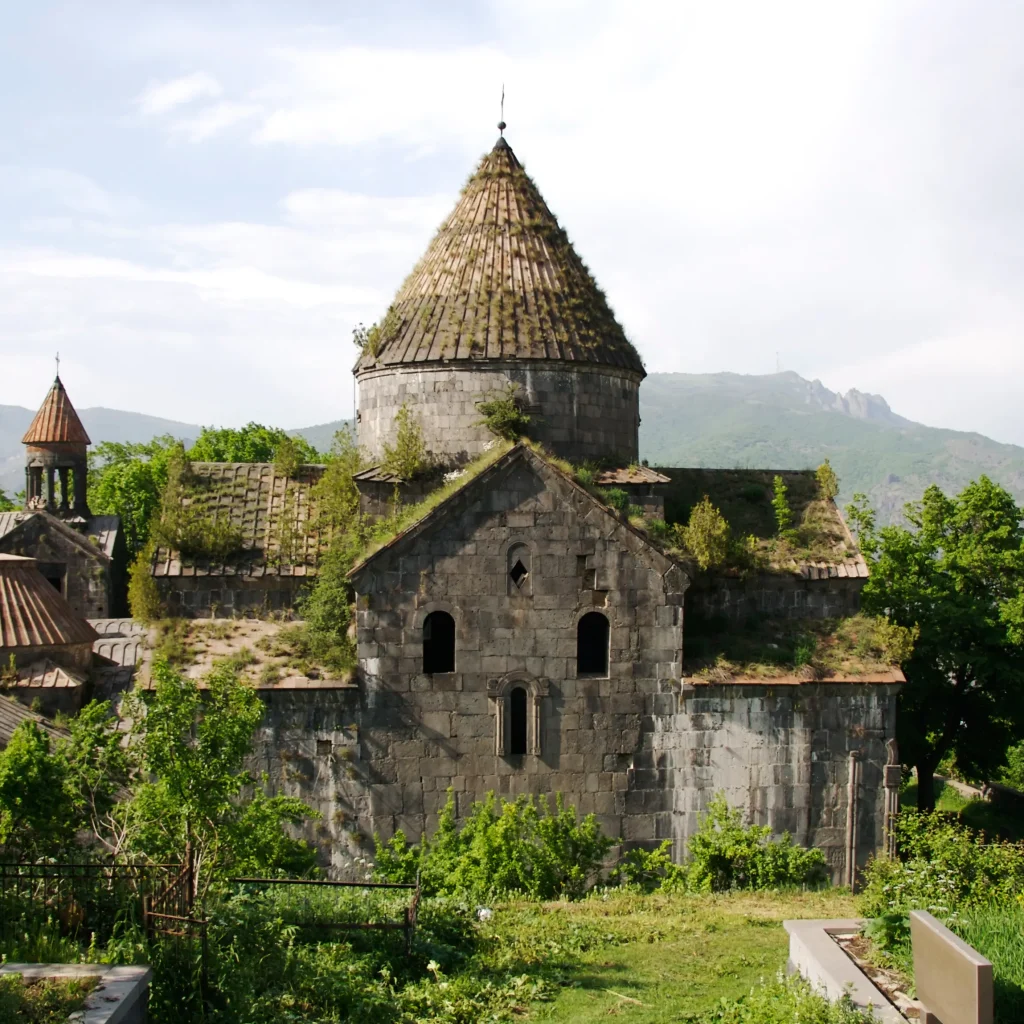
The monastery of Sanahin is located in the north of Armenia, in the Lori region, near the industrial town of Alaverdi, around a 3-hour drive from Yerevan.
The name Sanahin (Sa-na-hin) translates as “this one is older than that one,” referring to another monastery, Haghpat, located about 3 kilometers east, with which it is jointly included in the UNESCO World Heritage Site.
The monastery was founded in the 10th century, on the site of a pagan temple, the remains of which can still be seen in one of the corners of the main church. Historians believe the temple was dedicated to the Armenian goddess Anahit, the goddess of motherhood, and that the name Sanahin may have been derived from her name.
The complex includes the following structures:
- Zangakatun (Bell Tower), built by Prince Vache Vachutyan in the 10th century, which makes it the earliest bell tower construction in Armenia
- St. Astvatsatsin Church
- The Vestibule (Gavit)
- Surb Amenaprkich (Holy Savior)
- St. Grigor Chapel
- Seminary
- Bookstore, Bell Tower
St. Hakob Church - St. Harutyun Chapel
- Auxiliary buildings and family tombs of noble dynasties such as the Kyurikyans and Zakaryans
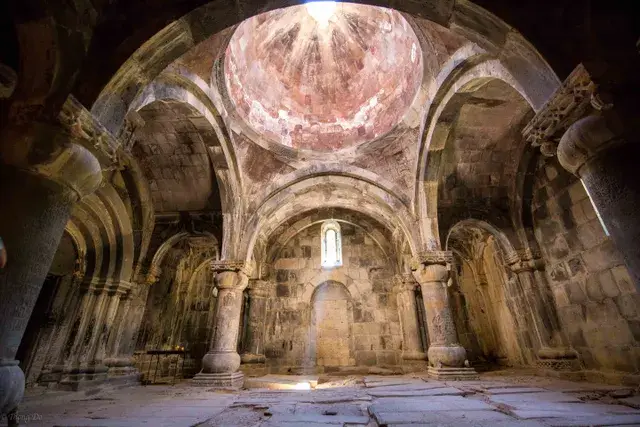
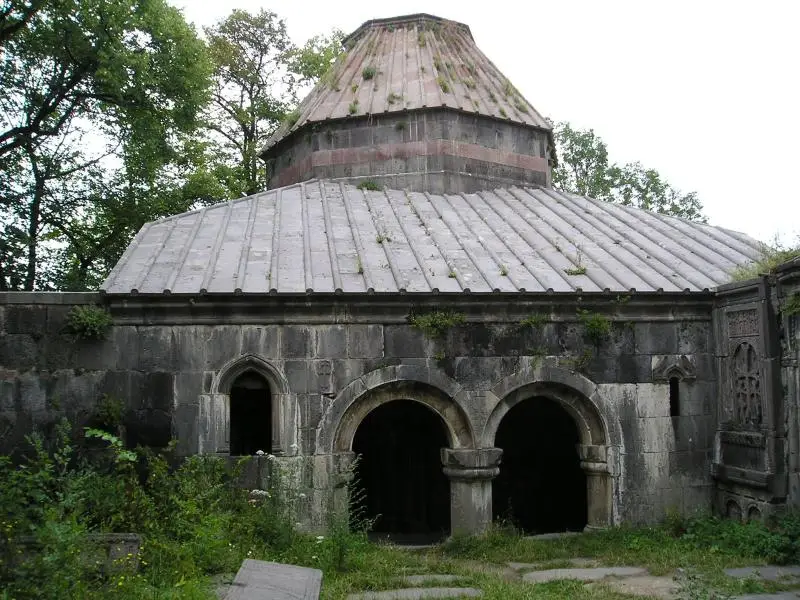
The oldest building in the complex is the Church of the Holy Mother of God, built during the reign of King Abbas I Bagratuni around 930–950. Although the church was heavily damaged, it was restored in 1652, and still preserves some of its original frescoes.
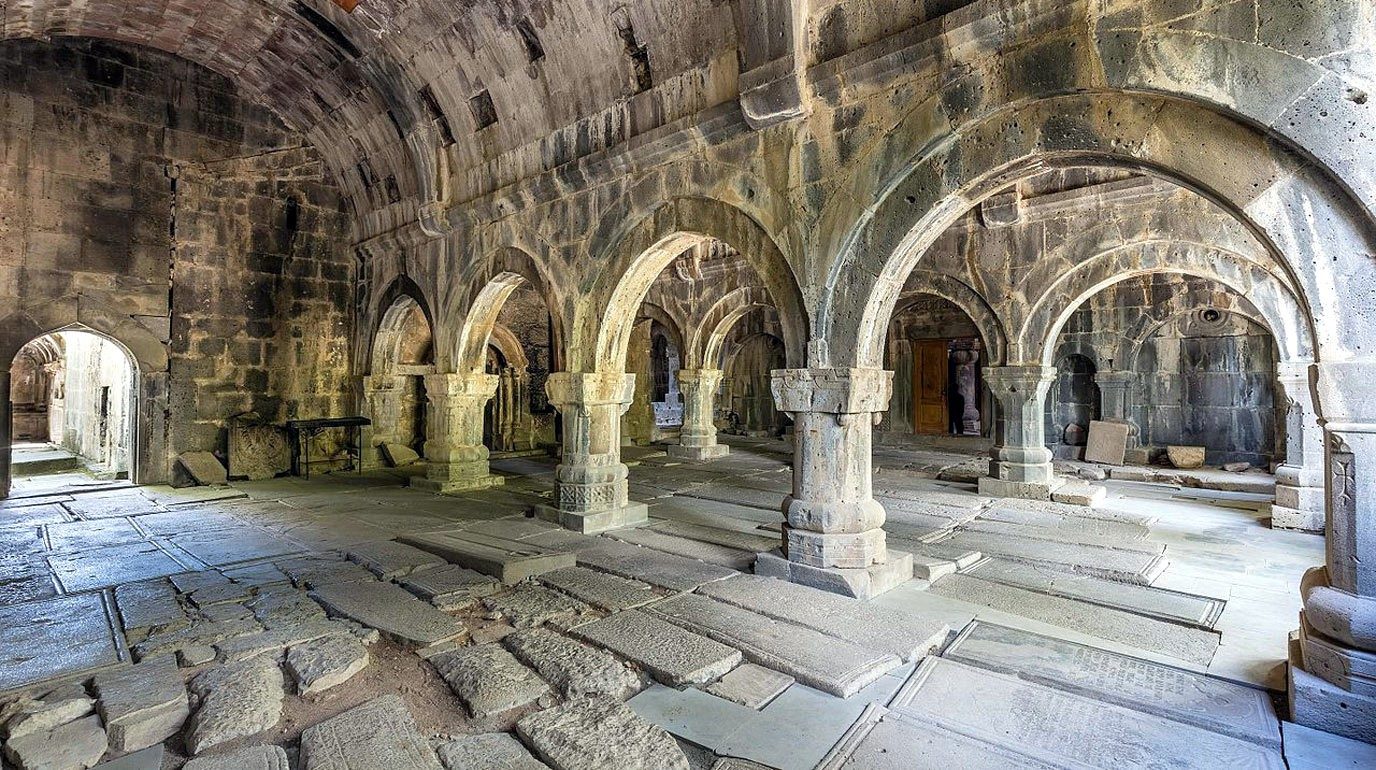
The Gavit, or vestibule, was built in 1211 by the order of Prince Vache Vachutyan, as stated in an inscription preserved on its southern wall. It is a unique structure with many arches and numerous wall inscriptions. The massive columns inside also served the adjoining seminary.
The St. Amenaprkich (Holy Savior) or Katoghike Church is the main and largest structure of the monastery. It was built in 966 by Queen Khosrovanush, wife of King Ashot III. The church holds a dominant position within the complex, with two entrances, a beautiful façade, and decorative arches.
On one of its facades, there is a stone relief of two kings — Kyurike and Smbat — whose names are carved above the frame. Kyurike was the founder of the Kyurikyan Kingdom, and Smbat reigned in Ani, the last capital of the Bagratuni Kingdom.
The corridor between the two main churches forms what is known as the Academy of Sanahin. Though the exact construction date is unknown, historians suggest it was built in the first half of the 11th century. According to historical records, Grigor Magistros — Armenian prince, scholar, scientist, and philosopher— taught here.
Sanahin’s bookstore is the oldest known Armenian library, built in 1063. It housed a rich collection of manuscripts, many of which have historical significance.
About 50 khachkars (cross-stones) have been preserved on the grounds of the monastery. The most famous among them was erected in 1184 and is embedded in the northern wall of St. Harutyun Church.
It’s also worth noting that around 190 lithographs, dating from the 10th to 19th centuries, have been preserved across various buildings, khachkars, and tombstones. Nineteen of these are related to construction, while the rest include royal decrees, government proclamations, prayers, memorials, and donor records.



Comment (0)